

Beyond the Job Title
Why “Design” Means Something Different to Everyone (and That’s Half the Problem)
❝The beginning of wisdom is the definition of terms.❞
— Socrates1 (who, as far as I know, never had to sit through a stakeholder meeting about ‘design alignment’)
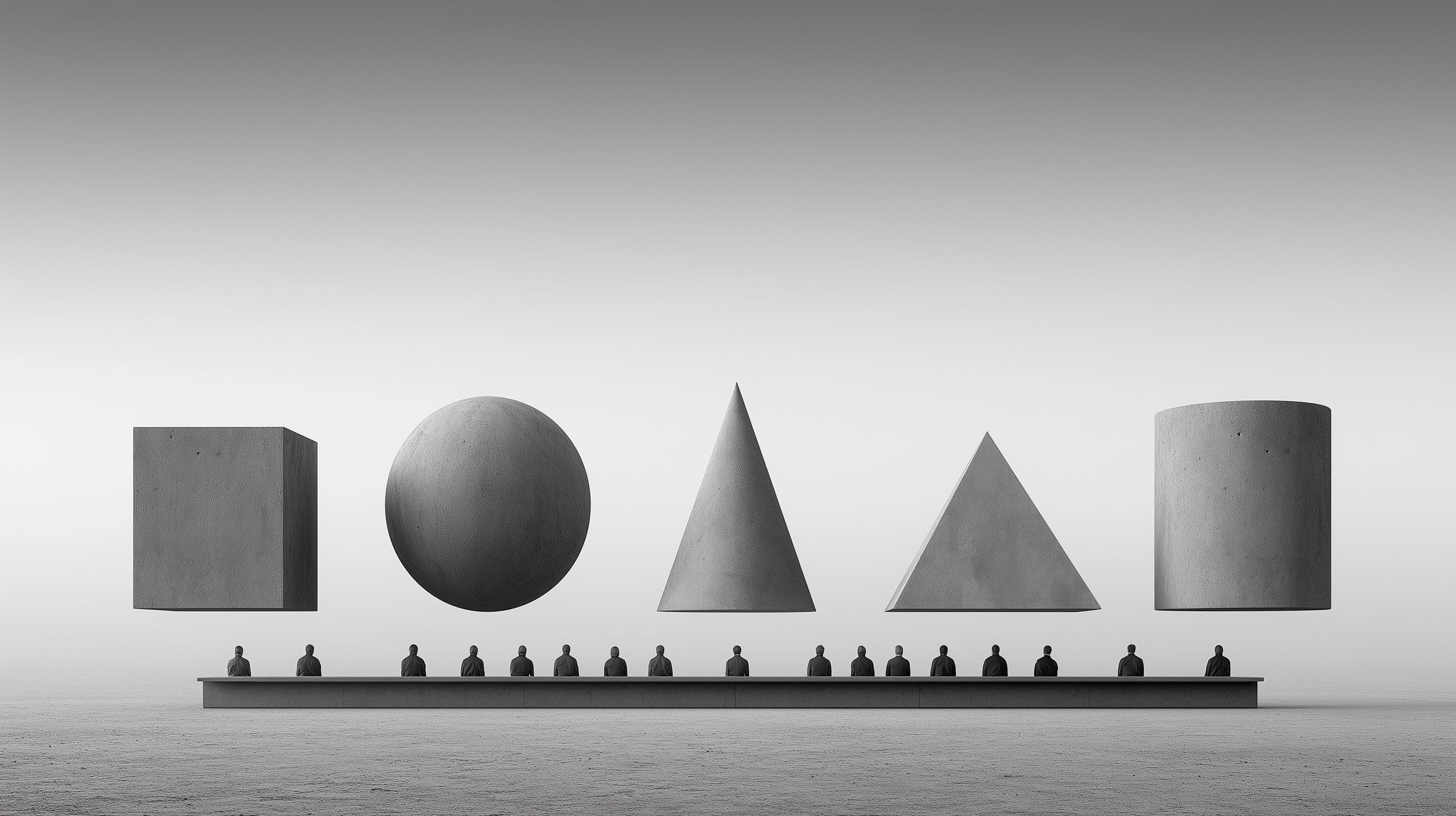
Let me set the scene: a recent project kickoff, a dozen professionals on the call, each with a different job title and, as it turns out, a different dictionary. For 45 minutes, we heard the word “design” so many times it started to sound like a made-up word. (You know when you say “banana” over and over and suddenly you’re not sure it’s even a thing?) We had architectural design, tech solution design, strategy design, service design, research design, UX design, UI design… You get it. It was funny, in that British way where you chuckle to yourself and then go home to question your life choices.
But here’s the thing: we can do better. Or at least, we can try to agree on what we’re talking about before we start arguing about it.
The Definitional Divide: Why We’re All Right (and Wrong)
If you ask ten designers what “design” means, you’ll get at least twelve answers. And if you ask the managers and CEOs in the room, you’ll get a few more —plus a request to make it “pop.”
Let’s break down the usual suspects:
The Visual Traditionalists
Graphic designers, visual designers, the folks who know their Pantone from their elbow. For them, design is about how things look: typography, colour, composition, and ensuring your brand guidelines are followed, even if it kills them —and it might. They’re the ones who can spot a misaligned pixel from across the room (I’m a proud master of this), and who believe Comic Sans is a crime against humanity.
The Digital Functionalists
UX and UI designers, living in Figma, dreaming in wireframes. For them, design is about flows, usability, and making sure your nan can use the app without accidentally ordering a tractor. They’ll talk about user journeys, accessibility, and “delight” —which, in practice, means making sure the button is big enough to tap but not so big it looks like a toddler’s toy.
The Strategy Evangelists
Service designers, design thinkers, and anyone who’s ever uttered the phrase “ecosystem mapping” without irony. For them, design is a way of thinking —a strategic tool for solving problems, changing organisations, and occasionally making things so complicated you need a workshop to explain the workshop.
The “Everyone Else” Brigade
Architects, engineers, researchers, product managers—all claiming their own flavour of “design.” And why not? If you can design a building or a database, surely you can have an opinion on a button, right?
Mike Monteiro’s North Star (and Why I Keep Coming Back to It)
Amidst all this, I find myself returning to Mike Monteiro’s definition:
“Design is the intentional solution to a problem within a set of constraints.”
It’s beautifully simple. It’s also the only definition I’ve found that doesn’t immediately start a fight. (Try it at your next meeting. If nothing else, it’ll buy you five minutes of silence while everyone thinks.)
Monteiro’s point is that design isn’t just about making things pretty, or usable, or strategic. It’s about intent. It’s about solving a problem—on purpose, not by accident. And it’s about doing it within constraints: time, budget, technology, taste, and, yes, the occasional client request that makes you question the very fabric of reality.
The Cost of Confusion
Here’s the problem: when we disagree on what “design” means, we end up talking past each other. Projects stall. Teams argue. Managers get frustrated. And somewhere, a designer quietly weeps into their oat flat white.
Real-world casualties of the definition war:
Misaligned expectations: The CEO thinks “design” means a new logo; the UX team thinks it means a six-month research project. Good luck reconciling that in a sprint review.
Territorial disputes: “That’s not real design!” (Always said with the same energy as “That’s not real football!” at the pub.)
Missed opportunities: When everyone’s defending their patch, no one’s looking at the big picture.
Industry fragmentation: We end up with silos, jargon, and enough job titles to fill a small phone book.
What We All Share (Even If We Don’t Admit It)
Despite the turf wars, there’s a thread that runs through all these versions of design. Whether you’re channelling Jonny Ive, Victor Papanek, or Khoi Vinh, we’re all trying to do a few things:
Solve problems for people. (Ideally, real people. Sorry, personas.)
Work within constraints. (Time, money, tech, taste, and the occasional existential crisis.)
Make decisions about form and function. (Even if you’d rather not talk about “form follows function” ever again.)
And, crucially, we’re all trying to make things better than they were before. Sometimes that means a beautiful poster. Sometimes it’s a seamless checkout flow. Sometimes it’s a service that works for the people who need it.
A Working Definition (That Might Actually Work)
So, what if we tried something radical: agreeing on a working definition before we start the next debate?
Here’s my proposal, inspired by Monteiro and a few late-night rants:
“Design is the intentional act of solving a problem for people, within the constraints of reality.”
It’s not perfect (what is?), but it’s broad enough to include everyone from the pixel pushers to the strategy gurus, and specific enough to remind us that design isn’t magic—it’s work, with boundaries.
How to Start the Next Design Conversation
A few tips, from someone who’s been in one too many “design alignment” meetings:
Ask what people mean by “design” before you argue about it. Seriously, just ask. You’ll save hours.
Acknowledge the constraints. If someone says, “We can’t do that,” they’re probably not being difficult—they’re being realistic.
Respect the different traditions. Graphic design isn’t better or worse than UX, it’s just different. Like tea and coffee. Or Marmite and literally anything else.
Look for common ground. We’re all trying to make things better. Start there.
Closing Thoughts
Design is a wonderfully slippery word. That’s what makes it powerful —and infuriating. But if we can agree, even for a moment, on what we mean when we say “design,” we might get somewhere. Or at the very least, we’ll have fewer meetings where the word loses all meaning.
And if all else fails, remember: if you can design your way out of a meeting about design, you’re probably doing something right.
Until next time,
NK
☉
P.S. If you’ve got your own definition of design (or a story about a meeting where no one knew what anyone was talking about), hit reply. I promise I won’t design a survey about it.
Socrates was a Greek philosopher from Athens. He is best known for his association with the Socratic method of question and answer, his claim that he was ignorant (or aware of his own absence of knowledge), and his claim that the unexamined life is not worth living, for human beings.